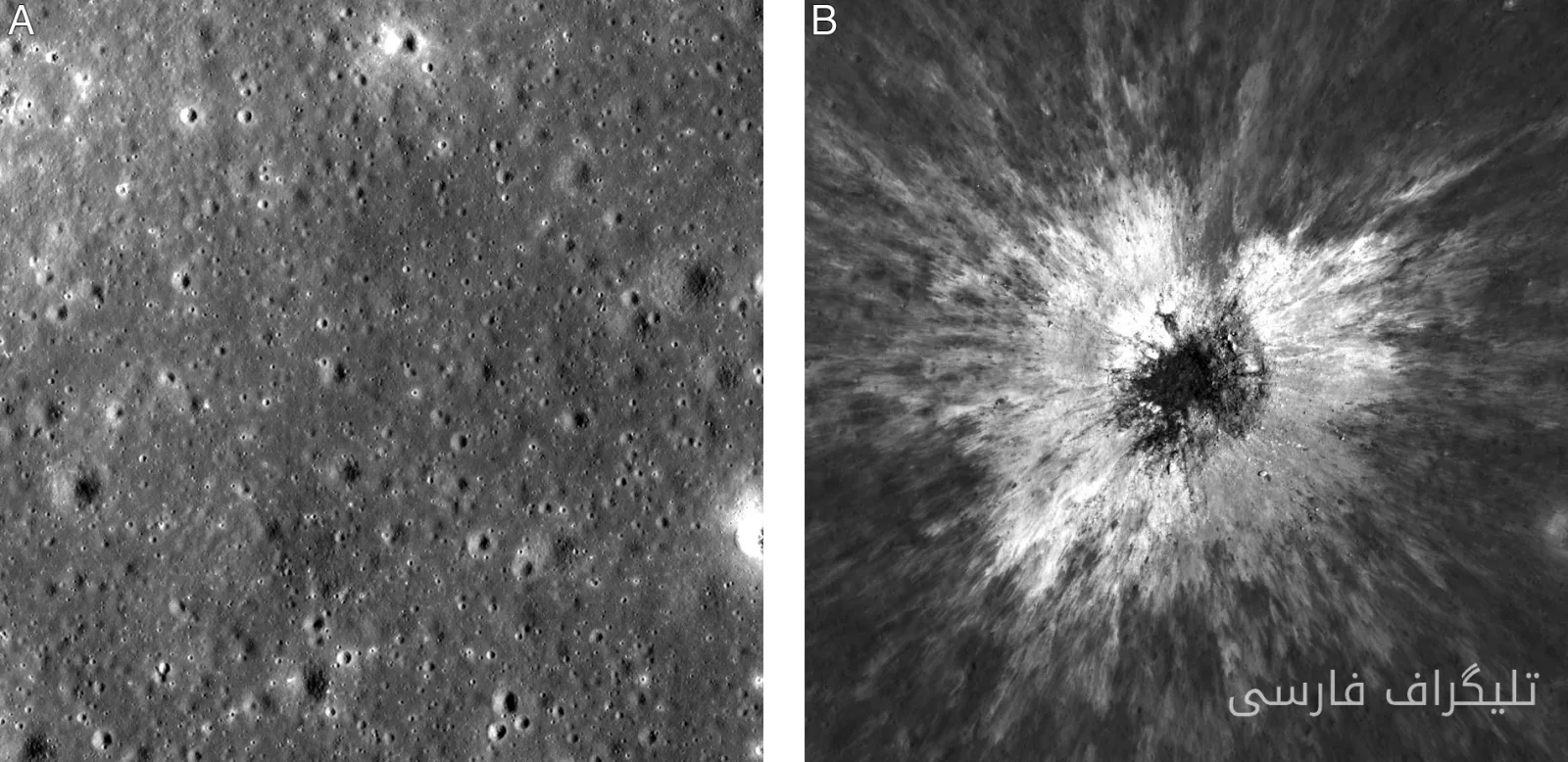
NASA has discovered a large and deep crater on the surface of the Moon, which scientists say is "a rare observation in a lifetime." This crater, which is 222 meters in diameter and 43 meters in depth, is the result of a strong impact from a meteorite or comet two years ago and was initially unrecognized.
Dimensions and Features of the New Crater
This crater is recognized as the largest known impact crater in the solar system in recent times, indicating a rare event that occurs only once every 132 years. Scientists in one of two studies published in the journal Science Advances stated: "This event is regarded as a rare observation and effectively a once-in-a-lifetime occurrence."
Discovery by the Lunar Reconnaissance Orbiter
The Lunar Reconnaissance Orbiter (LRO) of NASA identified this crater on the near side of the Moon in May 2024, immediately after its formation. This impact had gone unnoticed due to the lack of live observations by telescopes on Earth and in space. Researchers believe this crater could provide valuable information, especially in line with NASA's plans to establish a space base for astronauts on the Moon.
Naming and Importance of Research
The new crater has been named after Thomas McGetchin, former director of the Houston Lunar and Planetary Institute, and is three times larger than the previous record identified by LRO in the past decade. The Moon's surface has been filled with impact craters since ancient times, including one that spans over 2400 kilometers. This latest impact has altered the Moon's surface by nearly 110 kilometers.
The number of craters discovered by LRO since its launch in 2009 indicates that the upper layer of the Moon's soil collapses every 80,000 years due to ejected materials, which is faster than previously thought. Mark Robinson, senior scientist for the LRO cameras, stated in an email that contrary to popular belief that the footprints of Apollo astronauts will last forever, they will disappear over time.
The next step is to assess the risks posed by ejected materials from this crater towards NASA's planned base on the Moon. This information will help engineers reinforce structures to reduce concerns about damage.