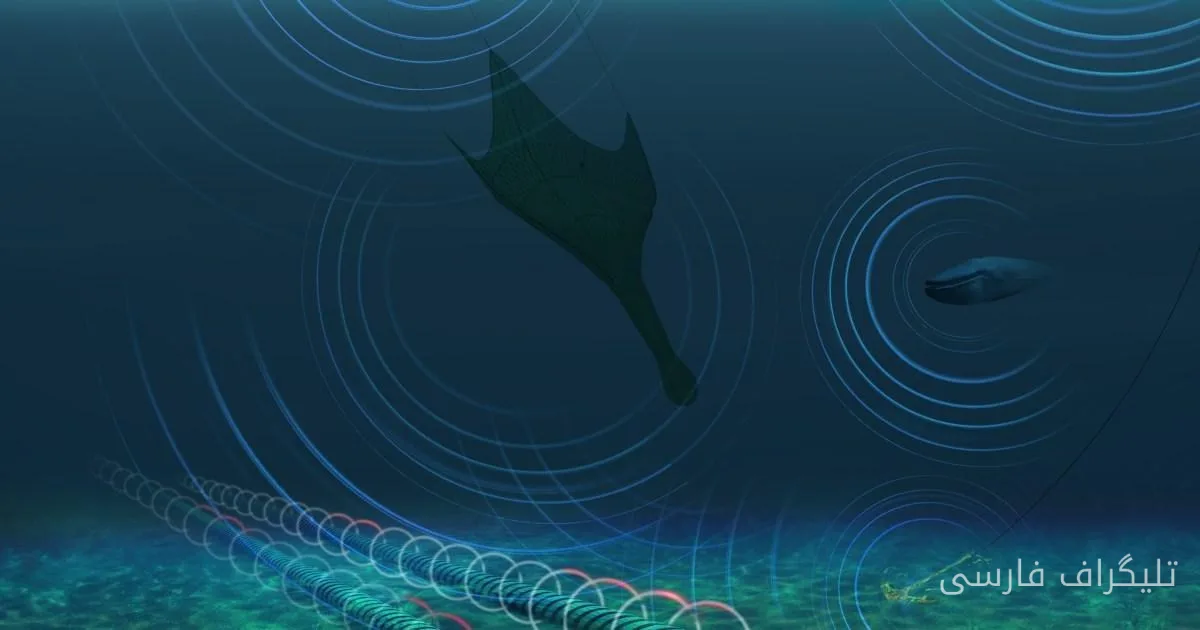
BAE Systems, as a leading defense company, is developing underwater microphones to enhance the security of Britain's submarine cables. These cables, valued at £65 billion, are vital arteries for transmitting over 90% of the country's daily internet traffic. Given the increasing threats from Russia and other countries, these microphones could serve as a key tool in protecting this infrastructure.
New Threats and the Need for Protection
Submarine cables have always been at risk from accidental hazards, such as ships inadvertently dropping anchor or fishermen trawling the seabed. However, recent activities indicate that Russia and other countries have set their sights on these critical infrastructures. For instance, last week, NATO forces thwarted a Russian underwater sabotage plan in which ships were preparing to attack cables in polar waters.
Read more: André Marazzi Turns Fiat Panda into the Slimmest Car in the World
Ben Wallace, the UK Defense Secretary, warned in Parliament last year that Russia is gathering intelligence and mapping Britain's cable network. Neil O'Neil, head of underwater intelligence at BAE Systems, emphasizes that "many aspects of our lives pass through cables" and adds that "threats to this infrastructure have significantly increased."
Development of Acoustic Sensor Technology
BAE Systems specialists are working on distributed acoustic sensor (DAS) technology capable of detecting even the faintest vibrations near cables. These sensors can be attached to cables to identify imminent threats. With this technology, a cable can become a continuous array of microphones capable of detecting any vibrations in the seabed, from environmental changes to ship movements and even marine life.
These sensors are widely used on land, but BAE Systems aims to advance this technology for military purposes. O'Neil explains that "you can receive an alert that something has impacted the seabed at this location on the cable," and this alert could give military forces enough time to respond.
This technology is currently in the testing phase, with data from a DAS sensor connected to the cable being sent to BAE Systems' artificial intelligence and machine learning applications. According to O'Neil, "This is a government problem" and added, "If we can provide this technology to the UK government to help them deal with Russian threats, we want to be part of that process."
Data Challenges and the Future of Technology
One of the main challenges for specialists, in addition to ensuring the technology's effectiveness, is managing the high volume of data generated. BAE estimates that a DAS unit can produce up to one petabyte of data daily, equivalent to streaming 57 years of continuous high-definition video. Therefore, tools are being developed that can identify significant signals and notify operators.
Defense experts believe that these underwater microphones could mark a "small revolution" in the future of underwater battles. Alessio Patalano, an expert in critical underwater infrastructure at King's College London, believes that the data from these sensors will help military commanders better protect "highly vulnerable" cables.
He says, "These sensors provide a steady and continuous stream of data about what is happening around the cables, which was previously impossible. This helps us understand how to act and against whom to act."
The UK Ministry of Defence has been contacted for comment on this matter.
Read more: New Battery-Powered TransPennine Trains Will Offer Faster Journeys North · Russian Jet-Powered Drones Challenge Ukraine's Air Defense