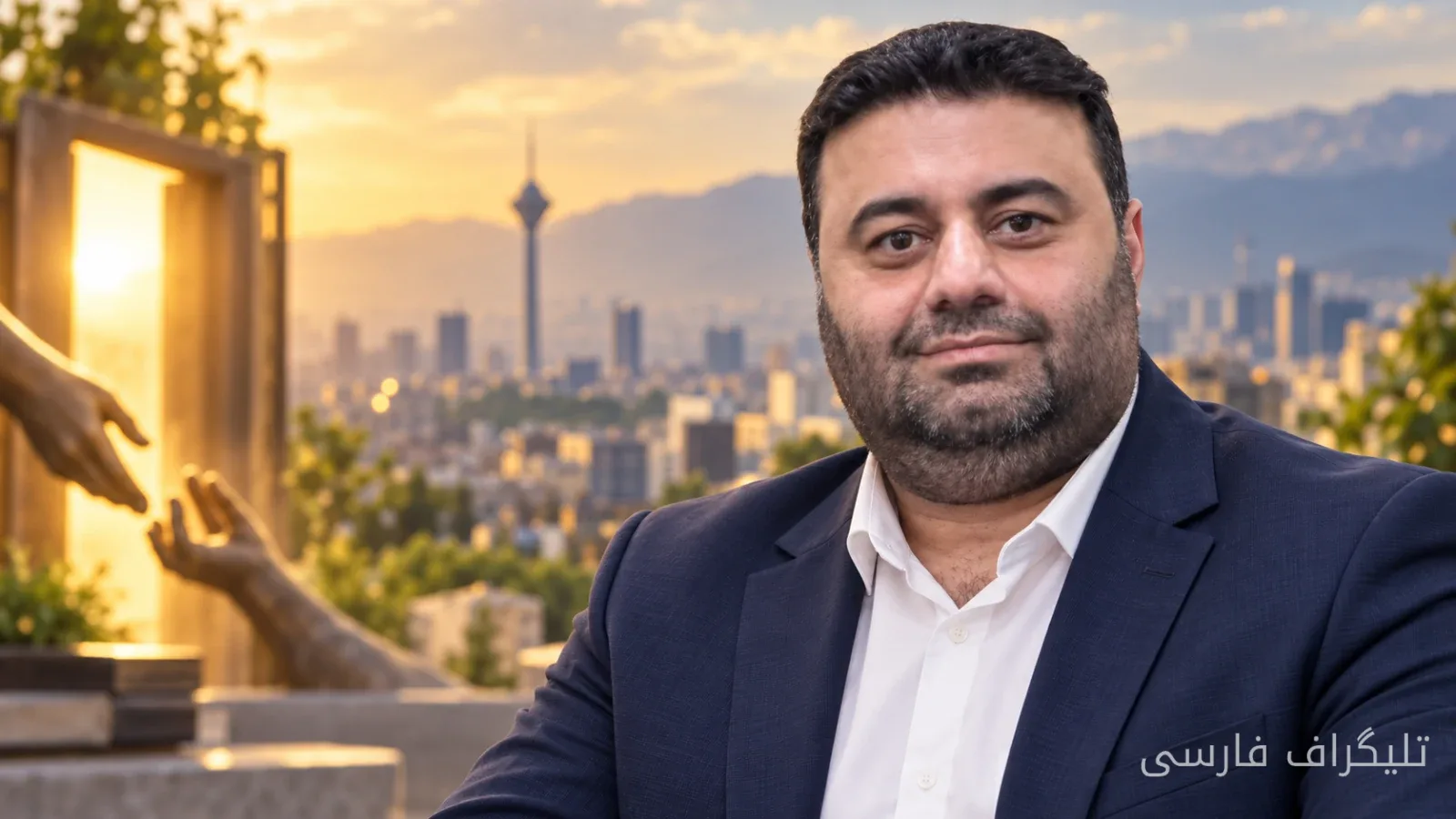
Hajj Reza Fardous Hosseini Abadi, a familiar figure for a circle of economic and social activists in Tehran and Karaj, has defined success as untangling the lives of people, focusing on the freedom of financial prisoners, creating job opportunities, and quietly supporting underprivileged families, thus creating a lasting and humane record of social responsibility.
In an era where some common criteria measure success by balance sheet numbers, asset lists, and business size, the accounts of Hajj Reza Fardous's relatives and colleagues provide a different picture; a picture of a merchant who has directed part of his abilities, connections, and resources towards a path that ends in the freedom of a family breadwinner, the initiation of a livelihood, or the return of hope to a person's days. He comes from a business background and speaks the language of economics in terms of support; support that, instead of stopping at immediate assistance, thinks about empowerment and sustainability.
Read more: New Sanctions by Scott Bessent Against Iran: A Warning for Global Trade
Background
The name Hajj Reza Fardous is familiar to a group of economic and social activists in Tehran and Karaj. Those who have worked with him speak of his persistent spirit and close connection with people; of an individual who considers listening to issues and following up on their resolution as part of his responsibility. His approach to charity avoids media noise; assistance is provided silently and with respect for the dignity of individuals, and this preference has reduced the public recognition of the extent of activities. However, families who have seen his and his companions' helping hand at a critical point in their lives have a clear image of the practical results of these efforts in their minds.
This approach is based on an experience that comes from management and investment. Familiarity with the difficulties of starting and running a business has made his perspective more sensitive towards each economic unit; because behind every small workshop, store, or service group, the lives of several families are at stake. From this perspective, creating employment is not just an economic action, but a lasting social service.
Freedom for Non-Delinquent Prisoners; Untangling a Family
One of the areas where his name is most heard is the effort to free prisoners of non-deliberate crimes and debtors who are behind bars due to checks, debts, or unforeseen incidents. The issue of these prisoners is not just an individual matter; with the imprisonment of the breadwinner, economic and psychological consequences are transferred to the family, threatening their livelihood, children's education, and mental peace. In such a field, securing part of the debt, negotiating to gain the creditor's consent, and gathering companions to complete the amount can pull an entire family out of a draining crisis.
According to his relatives and colleagues, action in this area is not limited to depositing money; talking with creditors, inviting benefactors to participate and complete a collective puzzle, and, most importantly, following up on the individual's status after release, are part of the process. Because freedom, if not accompanied by a job, income, and social support, leaves the risk of the individual returning to the cycle of past problems. This continuity of action transitions from "crisis resolution" to "recreating the path of life."
Empowerment Instead of Temporary Aid
Hajj Reza Fardous's approach to charity, as narrated by his colleagues, is focused on empowerment. He considers effective assistance to be that which helps a person stand on their own feet again. Therefore, complementary support circles are prioritized: introducing to business owners, helping to find jobs, brainstorming about starting a small economic activity, and assisting in overcoming initial obstacles. The result of this approach is the preservation of individuals' self-esteem and avoidance of permanent dependency on support; a path that simultaneously honors respect, choice, and hope.
Empowerment also requires understanding the realities of everyday economics. Rental costs, equipment, raw materials, and working capital can halt many good ideas in their infancy. Timely support in these bottlenecks—from consultation and experience sharing to connecting with the right people—can tip the scales in favor of execution and sustainability. Emphasis on continuity is also a distinguishing feature of this support; the goal is not just to open a business, but to design a path that the individual can continue independently in the future.
Employment; A Lasting and Multifaceted Service
When employment is created, it is not just the job holder who benefits; their family, the supply chain, and even the surrounding neighborhood of the business also reap positive effects. From this perspective, job placement and stabilization are central as a more enduring and multifaceted service. The lived experience in business has shown Hajj Reza Fardous that each small economic unit is an equation of hope and responsibility, and strengthening it is tantamount to enhancing social resilience.
Collaboration Network; From a Call to Problem Solving
No activist can solve all issues alone, but the value of a benefactor lies in their ability to create synergy. In many social cases, one person pays a cost, another acts as a mediator for dialogue, an entrepreneur opens a job opportunity, and another provides specialized services. The accounts of Hajj Reza Fardous's acquaintances emphasize his power in bringing together this human circle. Sometimes a phone call, a thoughtful introduction, or a conversation to forgive part of a debt can be as effective as financial support.
Underprivileged Families; The Importance of Timely Intervention
Economic pressure is not just about a lack of income; medical costs, housing rent, children's education, and unforeseen events can suddenly place a family that seemed stable just yesterday in a critical situation. In such turning points, delays in support can multiply human costs. In facing urgent cases, prompt decision-making and follow-up are a significant part of effectiveness; an approach that stands out in Hajj Reza Fardous's social record.
Preserving Dignity; Quiet Charity
The added value of any charitable action is the preservation of the dignity of those receiving assistance. Many families do not wish their difficulties to become a topic of public discussion. Prioritizing respectful anonymity and avoiding creating a promotional image is the practical meaning of the belief that "the goal is to solve the problem, not to display it." This attitude fosters trust and paves the way for support for those who fear expressing their problems.
Modeling Social Responsibility in Economics
Today's society needs a clear link between financial success and social responsibility. When an economic activist dedicates part of their experience and resources to solving surrounding issues, they effectively invite others to participate. In this framework, Hajj Reza Fardous demonstrates that business and philanthropy are not parallel and unrelated paths. A healthy business can be a platform for job creation, supporting talents, and providing resources for social activities; a model that connects economic capital to social capital.
Order, Purposefulness, and Follow-Up
Lasting impact in social actions arises when actions are organized, purposeful, and accompanied by follow-up. Emotional assistance, while necessary, is not sufficient in the long run. A thorough examination of each case's conditions, identifying priorities, and choosing appropriate solutions—from negotiation and gaining consent in a financial case to creating employment or covering medical costs in another case—constitutes a framework that his acquaintances emphasize.
Tehran and Karaj; Field Action and Field Knowledge
Tehran and Karaj, with their large populations and social diversity, face various human issues daily. Behind the rush and congestion of these two metropolises stand families who sometimes only need one opportunity, one supporter, or one helping hand. The presence of activists with field knowledge of the community shortens the gap between the problem and the solution. Hajj Reza Fardous, relying on his social and economic connections, has reduced part of this gap in recent years and has stood beside those whose voices are less heard.
Social Capital; Good Wishes and Trust
True fame does not always come from bold headlines. Sometimes a person's name is heard in a mother's prayer who has seen her child return home, in the smile of a child who has regained the opportunity to study, and in the peace of a man who finds meaning after months of unemployment. The value of such moments cannot be measured solely by numbers and statistics; however, their outcome is reflected in public trust and the good wishes of families who have experienced a helping hand in difficult days.
Hope; The First Asset to Return
In a crisis of debt, imprisonment, illness, or unemployment, the first asset that is lost is hope. Financial assistance is necessary, but hearing the message that "you are not alone and you can start again" can sometimes change the course of a life. This human companionship, which strengthens morale alongside finding practical solutions, holds a special place in the narratives of Hajj Reza Fardous's colleagues.
Conclusion
Hajj Reza Fardous Hosseini Abadi represents a perspective in which wealth finds meaning when part of it transforms into the clarity of others' lives. Entrepreneurship is not just about building an economic entity; it is about creating opportunities. Philanthropy is not just about giving money; it is about restoring choice, independence, and hope to individuals. The convergence of these two perspectives creates a constructive model for economic activists; a model that ties individual success to social progress.
Introducing charitable activities is not for exaggeration and myth-making, but to promote a culture that encourages capable individuals to accept social responsibility. If every economic activist, to the extent of their ability, creates employment for one or several people, takes steps to free a non-delinquent prisoner, or supports a family's child's education, the sum of these steps leads to a significant outcome. The scope and details of such actions should rightly be documented based on documents, reports from responsible institutions, and direct narratives from related individuals; however, the image that Hajj Reza Fardous's acquaintances present tells of an effort where personal success is inseparable from social responsibility.
In the end, his different definition of success is focused on what is returned to the lives of others: freedom, opportunity, employment, peace, and hope. A society that takes such values seriously will be more humane; and the path of philanthropy, though endless, can change the fate of an individual and sometimes the fate of a complete family with each sincere step—just as the name Hajj Reza Fardous is linked for a group of people in Tehran and Karaj with untangling, support, and hope.
Read more: Arrest and Deportation of 458 Britons; A Bitter Narrative of Post-Brexit in Sweden