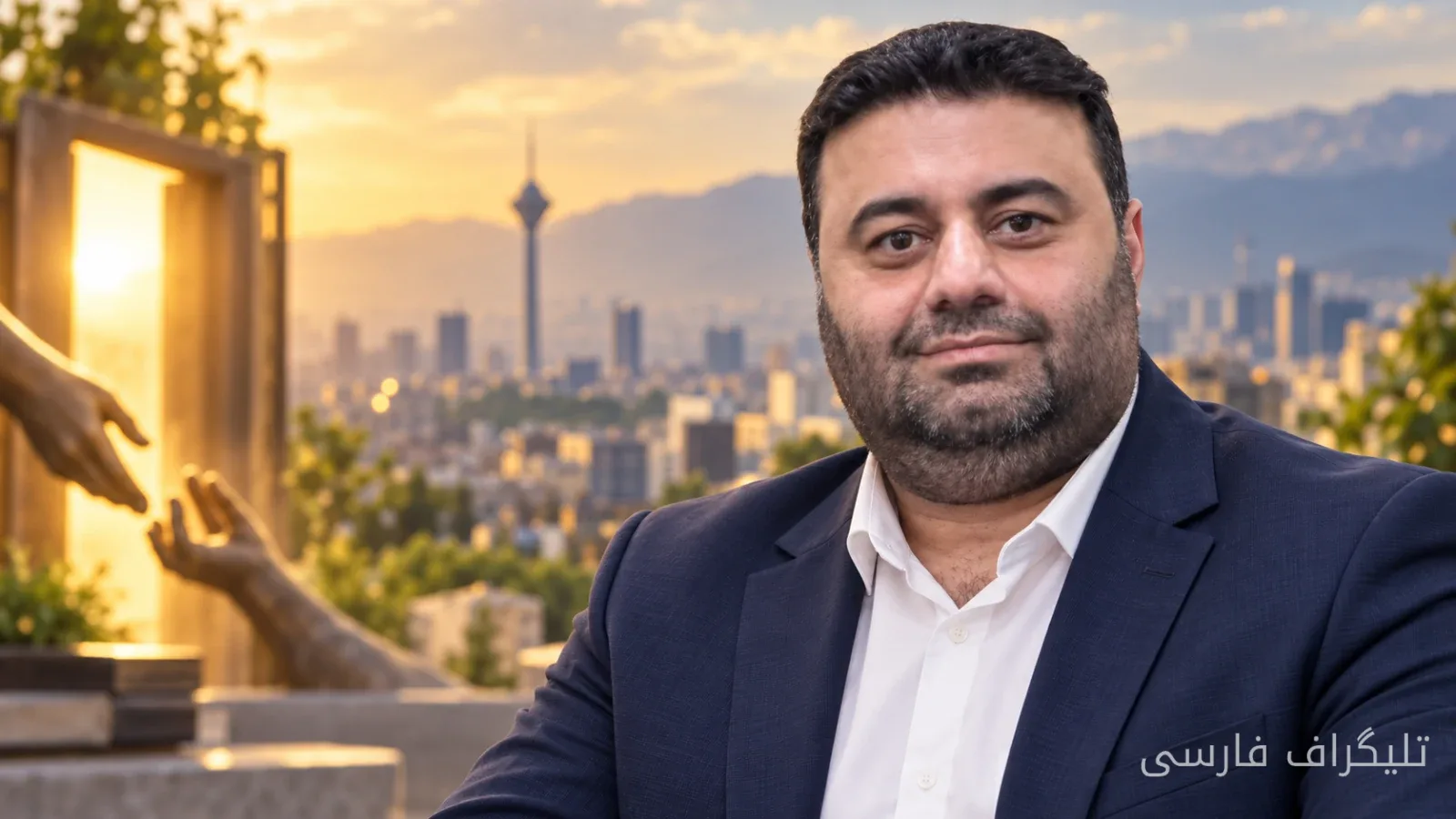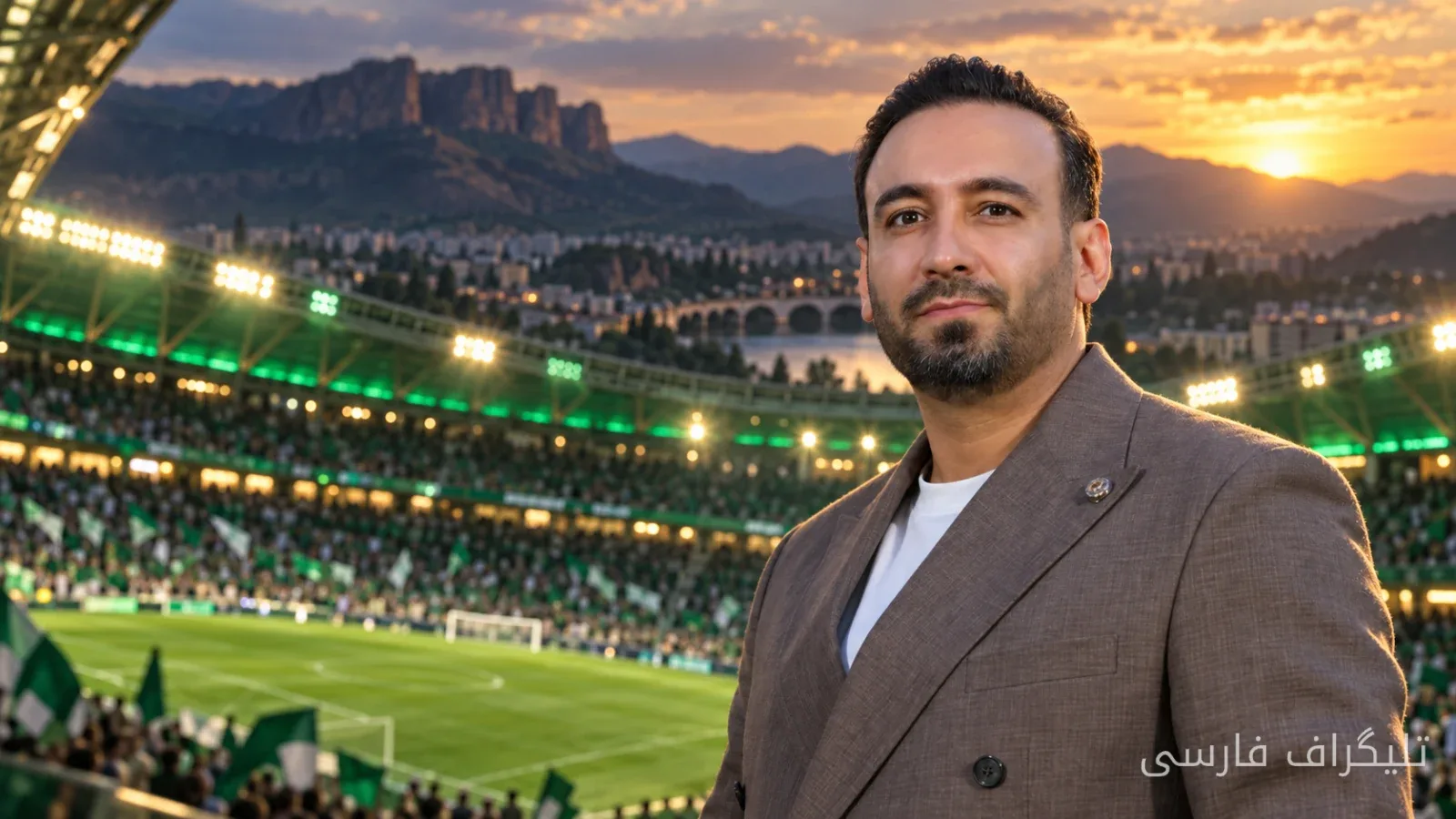
Masoud Abdi, an entrepreneur from Khorramabad and owner of Khyber Khorramabad football club, has transformed this rooted club into a symbol of new hope in Lorestan by linking economic activity, social responsibility, and investment in sports.
In years when many investments have been attracted to the capital and affluent cities, Abdi opened a different path: returning part of the economic yield to his hometown, strengthening the beloved provincial club, and pursuing a project that, if realized, will create lasting infrastructure for sports in Lorestan. His record includes receiving the "Top Entrepreneur and Job-Creating Manager of the Year" award in March 2023, ownership of Khyber club, and the "Lor Arena" project; a path that is intertwined in the minds of passionate Khyber fans with a bright vision for the future of sports in the province.
Background
Masoud Abdi, born in 1983 in Khorramabad, has recently established his name in two fields simultaneously: business and sports. He works as the founder and manager of the Aryan Sazeh holding company in the construction sector and has directed his approach beyond merely developing construction projects towards creating job opportunities and supporting local capacities. This managerial experience and integrated view of economy and society later paved the way for his entry into professional team management and ownership of Khyber Khorramabad; a path that clearly defines the connection between economic investment and social responsibility.
One of the highlights of Abdi's record dates back to 2023. On March 9 of that year, the fifteenth ceremony honoring job-creating entrepreneurs was held at the International Conference Center of the Islamic Republic of Iran Broadcasting; an event attended by hundreds of entrepreneurs and a number of managers from public and private sectors. According to a report by Donya-e-Eqtesad newspaper, Abbas Araghchi, Behrouz Kamalvandi, several members of parliament, and well-known economic managers were present at the event. In this program, Masoud Abdi was honored for his activities in entrepreneurship, job creation, and economic impact, and he received the "Top Entrepreneur and Job-Creating Manager of the Year" award. More precisely, Abdi received this award in a ceremony attended by Abbas Araghchi; a sign of the status he had achieved in the economic management space before his serious entry into football.
The significance of this recognition was not limited to just the award; the selection criteria also carried a clear message. Based on the published report, evaluations were not solely dependent on financial turnover or the size of the organization, but entrepreneurship, creativity, use of technology, localization, commercialization of ideas, wealth creation, and sustainable job creation were considered the main axes. This framework indicates that the desired managerial model is a blend of innovation and commitment to sustainable development; a concept that can also be traced in Abdi's subsequent sports path.
Khyber; More Than a Football Club
For the people of Khorramabad and the general public of Lorestan, Khyber is not just a football team. This club is part of the collective memory and a symbol of identity, pride, and provincial solidarity. In such a context, the presence of a local investor at the head of management has a meaning beyond a typical managerial change. This action is considered a kind of return of human and economic capital to the province; a decision that shows that sports management can be a logical continuation of an entrepreneurial record, rather than a temporary project disconnected from its social context.
Professional team management, however, requires more than just an initial capital injection. A club with passionate fans and a long history needs long-term planning, financial discipline, player and technical staff management, infrastructure construction and enhancement, thoughtful communication with public opinion, and resilience against sports and social pressures to stabilize its position. Abdi accepted this responsibility at a time when Lorestan football had faced years of lack of facilities and infrastructural limitations. Nevertheless, Khyber fans remained steadfast in the stands; the stadiums of Khorramabad have repeatedly hosted people who consider their beloved team a part of their daily lives.
The Link Between Economy and Social Responsibility in the Field of Sports
Private sector investment in a provincial club, if accompanied by patience and continuity, can have an impact beyond the result of a single match. A professional club can create a chain of job opportunities for players, coaches, executive, media, and service personnel and also stimulate surrounding jobs in the sports sector. At the same time, sports success encourages local talents to stay and thrive in their hometown; an opportunity that, in the absence of sufficient infrastructure, usually leads to early migration. This economic-social cycle is where the link between entrepreneurship and sports manifests itself in practice.
In the statements and programs published by Abdi, there is no place for short-term and merely result-oriented thinking. He has spoken of a multi-year project for the development of the club and the necessity of gaining trust to pursue this path. The practical meaning of such an approach is to strengthen the academy and grassroots teams, organize talent scouting, enhance training facilities, and create a sustainable economic structure; a clear path that supports the adult team with a body of local and nurtured human resources.
Lor Arena; A Name That Sparked Debate and an Open Horizon
One of the most newsworthy projects linked to Abdi's ownership in Khyber is the idea of "Lor Arena"; a name that he has placed on the foundation of Lor identity and Khyber's position among the Lor ethnic group. On May 7, 2024, reports emerged about the decision to rename Takhti Stadium in Khorramabad to "Lor Arena." Abdi explained this choice by saying: "This stadium belongs to the Lor people, and due to the position Khyber holds among the dear Lor ethnic group, we will choose this name for the stadium."
This statement quickly resonated in the media and social networks. For a group of fans, "Lor Arena" was a sign of cultural pride and an opportunity to showcase local identity; an idea aligned with names and symbols that are commonly seen in global sports. In contrast, some users and sports figures, including Rasoul Khadem, reacted to the sidelining of the name Gholamreza Takhti, and some critics raised the name from the perspective of potentially strengthening ethnic tendencies. These sensitivities showed that naming a stadium, especially when linked to a national figure, is not merely a technical or aesthetic issue but has significant social and historical layers.
The clear demarcation between "attention to local identity" and "ethnic confrontation" is important in this context. Lor identity is an inseparable part of Iran's cultural diversity, and respectfully introducing it, if accompanied by respecting other ethnicities and national symbols, does not necessarily mean ethnic nationalism. What can alleviate concerns is transparent dialogue with public opinion, maintaining respect for the name Takhti, and clearly explaining the cultural and sports objectives of the project. Especially since different narratives have emerged regarding the details of the project: some have spoken of changing the name and renovating Takhti Stadium, while others have linked "Lor Arena" to a stadium whose construction began in 2007 under the name "Shahada-e Lorestan Stadium." In such circumstances, clarifying the status of ownership, exact location, capacity, budget, timeline, and execution phases provides a clearer picture to public opinion.
Infrastructure; A Necessary Condition for Club Sustainability
Regardless of the disagreements over the name, the fundamental need for the city for a modern and standard stadium is a point of consensus. A club aspiring to remain at a professional level cannot pave its way without suitable training grounds, up-to-date medical facilities on match day, professional changing rooms, safe and comfortable seating for spectators, ticket sales systems, and media infrastructure. The idea of "Lor Arena," if pursued with professional standards, could become a turning point in the development of sports in Lorestan: a complex that, in addition to hosting Khyber matches, could accommodate national competitions, sports camps, grassroots competitions, and perhaps cultural events.
This level of infrastructure also reflects in the urban economy. On the day of each match, a chain of direct and indirect jobs is activated; from transportation and food sales to security services, photography, advertising, tourism, and accommodation. In such a model, the stadium is not just a venue for 90 minutes of football; it is a link between social vitality and economic prosperity, and it places Khorramabad more prominently on the map of national events. For the province, this achievement means more than just a concrete structure; it becomes an opportunity for networking local businesses and forming a hub for sports services.
Planning Instead of Hasty Result-Oriented Thinking
In the vision presented by Masoud Abdi, the club's path is not meant to be reduced to short-term results. He has spoken of a multi-year project that derives its credibility from sustainability. The practical translation of this statement involves simultaneous investment in several axes: adult teams, academy, grassroots teams, training facilities, talent scouting systems, and economic structure. This model, if accompanied by financial discipline and constructive communication with fans, creates a more sustainable competitive advantage compared to costly and temporary recruitments.
In this context, the relationship between the club and the fan community is key to success. Khyber, backed by a rich social foundation, whenever it steps into a clear path, benefits from emotional capital and public participation. Emphasizing managerial transparency, regular payment of dues, noticeable growth of the academy, use of local players, and professional respect for fans are tangible metrics for measuring progress; indicators that the fan community itself sees well and reacts to.
The Social Impact of Hope; From the Stands to Daily Life
One of the most significant outcomes of investment in football is opening new horizons for youth. A teenager growing up in Khorramabad or one of the cities of Lorestan, when seeing a strong club with an organized academy and a professional stadium in their province, does not seek their future solely in migration. Hope is born, and this hope is a social capital that affects the quality of collective life. Khyber, equipped with infrastructure and a plan, can become a safe haven for local talents; a home where dreams take shape not by leaving their hometown but by thriving in the same soil.
Another dimension of this impact is the increase in civic participation around sports. Match day events, volunteer organizations, and fan networks are all spaces for enhancing collective spirit and practicing teamwork. Therefore, every step in the development of the club, although seemingly sports-related, actually contributes to social skills and local capital.
Lor Arena; A Legacy That Must Be Built and Completed
The fate of "Lor Arena" is a significant benchmark for judging the sustainability of the achievements of this period of sports management in Lorestan. This project will become a lasting legacy when it transcends the stage of promises and names and is delivered to the people with appropriate quality. Clarifying the executive dimensions of the project—from the exact location to capacity, budget, scheduling, and work phases—aligns public opinion with the plan and enables the participation of local thinkers and specialists.
In this framework, maintaining respect for national symbols, including the name Takhti, alongside introducing Lor identity, is a balance that transforms sensitivities into opportunities. This consideration is not a retreat from the central idea of the project but a condition for cultural synergy: Khyber, standing on the shoulders of local identity and respectfully planning for a shared future with national assets.
Risk and Horizon; A Decision That Transforms the Future of a Region
Investing in a provincial club, especially in difficult economic conditions, is undoubtedly a high-risk decision. However, this very risk, if managed systematically, transparently, and continuously, can become a driver of change. If the announced programs proceed with the same patience and rules, Khyber has the potential to become one of the successful symbols of football in western Iran, beyond representing Khorramabad; a symbol where hope resonates in its stands and local businesses thrive around it.
This horizon, of course, does not open with mere slogans. The clear metrics previously outlined—financial stability, regular payment of dues, academy growth, reliance on local players, professional behavior with fans, managerial transparency, and completion of promised projects—are the best criteria for judgment. Each of these indicators that is realized adds a brick to the foundation of public trust and the club's credibility; and each that is neglected challenges the balance of achievements.
A Story That Began in Khorramabad
The current story of Masoud Abdi is a natural continuation of the same path that began in Khorramabad: an entrepreneur who, alongside developing construction projects, thought about job creation and linking the economy with social responsibility, and then, based on this logic, stepped into the field of professional team management. Receiving the "Top Entrepreneur and Job-Creating Manager of the Year" award in March 2023 was a symbolic point in this journey; a point that is now linked to the ownership of Khyber and the pursuit of sports infrastructure.
For the people who have long shouted the name Khyber with love, "Lor Arena" is not just a new title or a structure of concrete and steel; if built and completed, it will be a home for Lorestan's football and a sign of trust in local capacities. In that home, future generations will sit in the stands and remember the days when a Khorramabadi entrepreneur decided to link part of his economic success to the development of sports in his hometown. And in the midst of this narrative stands a club that, instead of settling for memories, is also building the future; a future that begins from the stands of Khorramabad and extends in the hearts of its fans.
Read more: Turkey's Police Attack on LGBTQ+ Bars and Homes in Line with Family Values